
 Image 1 of 1
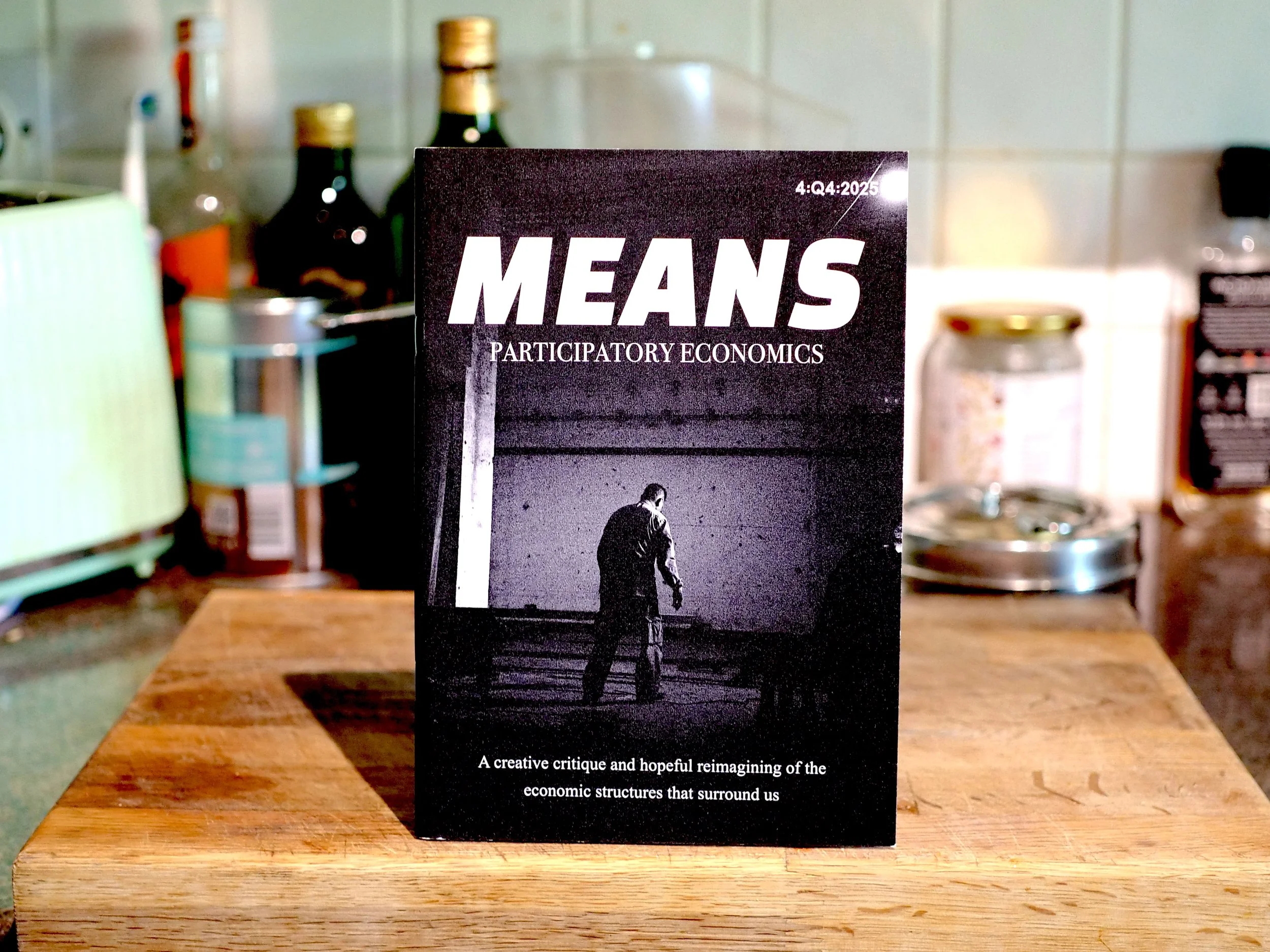
MEANS magazine issue 4: Participatory Economics
Issue 4 of our magazine: 76 color pages of essays, artworks, scores and music relating to our theme of community, economics, and capitalism. Includes free DL of an accompanying album.
Sunbathing in the shallow end of late-stage capitalism,
it is easy to think of ‘the economy’ as an abstract
imposition, something that directs the tenor of our
lives but over which we except little control.
Mortgages, credit scores, inflation, the stock
exchange, each some fiscal boogieman that lives
forever in the bylines of newspapers, looming down
upon us from afar. In contrast, ‘economy’ is at its
heart a subset of ‘community’ - referring to the way a
group of people shares its resources: how it
distributes, produces, and consumes. Whist the
capitalist economy is concerned with increasing profit
- often at the expense of those involved in the
production of its resources (goods and services), a
participatory economy, in contrast, is interested in how
we produce, and who benefits from the distribution of
a societies resources.
In this issue of MEANS we have invited artists to
respond to the notion of a participatory economy,
exploring both critiques of the dominant capitalist
system, and the affordances of art as another form
of economy, a creative sharing of ideas. Inside, you will
find resistance strategies, new artist models for the
distribution of goods, reflections on gender (as it
pertains to economics), and more. We take a moment to
consider the often hidden workers who keep capitalist
structures going, the role of art festivals in
embodying alternative economic models, and the
reimagining of power dynamics found in improvisation
and graphic scores.
Given the current economic climate, it seems more
pressing than ever that artists strive to imagine and
present alternative possibilities - each a potential
model for what might come next, the much-needed
successors to our current, unsustainable economy.Issue 4 of our magazine: 76 color pages of essays, artworks, scores and music relating to our theme of community, economics, and capitalism. Includes free DL of an accompanying album.
Sunbathing in the shallow end of late-stage capitalism,
it is easy to think of ‘the economy’ as an abstract
imposition, something that directs the tenor of our
lives but over which we except little control.
Mortgages, credit scores, inflation, the stock
exchange, each some fiscal boogieman that lives
forever in the bylines of newspapers, looming down
upon us from afar. In contrast, ‘economy’ is at its
heart a subset of ‘community’ - referring to the way a
group of people shares its resources: how it
distributes, produces, and consumes. Whist the
capitalist economy is concerned with increasing profit
- often at the expense of those involved in the
production of its resources (goods and services), a
participatory economy, in contrast, is interested in how
we produce, and who benefits from the distribution of
a societies resources.
In this issue of MEANS we have invited artists to
respond to the notion of a participatory economy,
exploring both critiques of the dominant capitalist
system, and the affordances of art as another form
of economy, a creative sharing of ideas. Inside, you will
find resistance strategies, new artist models for the
distribution of goods, reflections on gender (as it
pertains to economics), and more. We take a moment to
consider the often hidden workers who keep capitalist
structures going, the role of art festivals in
embodying alternative economic models, and the
reimagining of power dynamics found in improvisation
and graphic scores.
Given the current economic climate, it seems more
pressing than ever that artists strive to imagine and
present alternative possibilities - each a potential
model for what might come next, the much-needed
successors to our current, unsustainable economy.
Issue 4 of our magazine: 76 color pages of essays, artworks, scores and music relating to our theme of community, economics, and capitalism. Includes free DL of an accompanying album.
Sunbathing in the shallow end of late-stage capitalism,
it is easy to think of ‘the economy’ as an abstract
imposition, something that directs the tenor of our
lives but over which we except little control.
Mortgages, credit scores, inflation, the stock
exchange, each some fiscal boogieman that lives
forever in the bylines of newspapers, looming down
upon us from afar. In contrast, ‘economy’ is at its
heart a subset of ‘community’ - referring to the way a
group of people shares its resources: how it
distributes, produces, and consumes. Whist the
capitalist economy is concerned with increasing profit
- often at the expense of those involved in the
production of its resources (goods and services), a
participatory economy, in contrast, is interested in how
we produce, and who benefits from the distribution of
a societies resources.
In this issue of MEANS we have invited artists to
respond to the notion of a participatory economy,
exploring both critiques of the dominant capitalist
system, and the affordances of art as another form
of economy, a creative sharing of ideas. Inside, you will
find resistance strategies, new artist models for the
distribution of goods, reflections on gender (as it
pertains to economics), and more. We take a moment to
consider the often hidden workers who keep capitalist
structures going, the role of art festivals in
embodying alternative economic models, and the
reimagining of power dynamics found in improvisation
and graphic scores.
Given the current economic climate, it seems more
pressing than ever that artists strive to imagine and
present alternative possibilities - each a potential
model for what might come next, the much-needed
successors to our current, unsustainable economy.Issue 4 of our magazine: 76 color pages of essays, artworks, scores and music relating to our theme of community, economics, and capitalism. Includes free DL of an accompanying album.
Sunbathing in the shallow end of late-stage capitalism,
it is easy to think of ‘the economy’ as an abstract
imposition, something that directs the tenor of our
lives but over which we except little control.
Mortgages, credit scores, inflation, the stock
exchange, each some fiscal boogieman that lives
forever in the bylines of newspapers, looming down
upon us from afar. In contrast, ‘economy’ is at its
heart a subset of ‘community’ - referring to the way a
group of people shares its resources: how it
distributes, produces, and consumes. Whist the
capitalist economy is concerned with increasing profit
- often at the expense of those involved in the
production of its resources (goods and services), a
participatory economy, in contrast, is interested in how
we produce, and who benefits from the distribution of
a societies resources.
In this issue of MEANS we have invited artists to
respond to the notion of a participatory economy,
exploring both critiques of the dominant capitalist
system, and the affordances of art as another form
of economy, a creative sharing of ideas. Inside, you will
find resistance strategies, new artist models for the
distribution of goods, reflections on gender (as it
pertains to economics), and more. We take a moment to
consider the often hidden workers who keep capitalist
structures going, the role of art festivals in
embodying alternative economic models, and the
reimagining of power dynamics found in improvisation
and graphic scores.
Given the current economic climate, it seems more
pressing than ever that artists strive to imagine and
present alternative possibilities - each a potential
model for what might come next, the much-needed
successors to our current, unsustainable economy.